
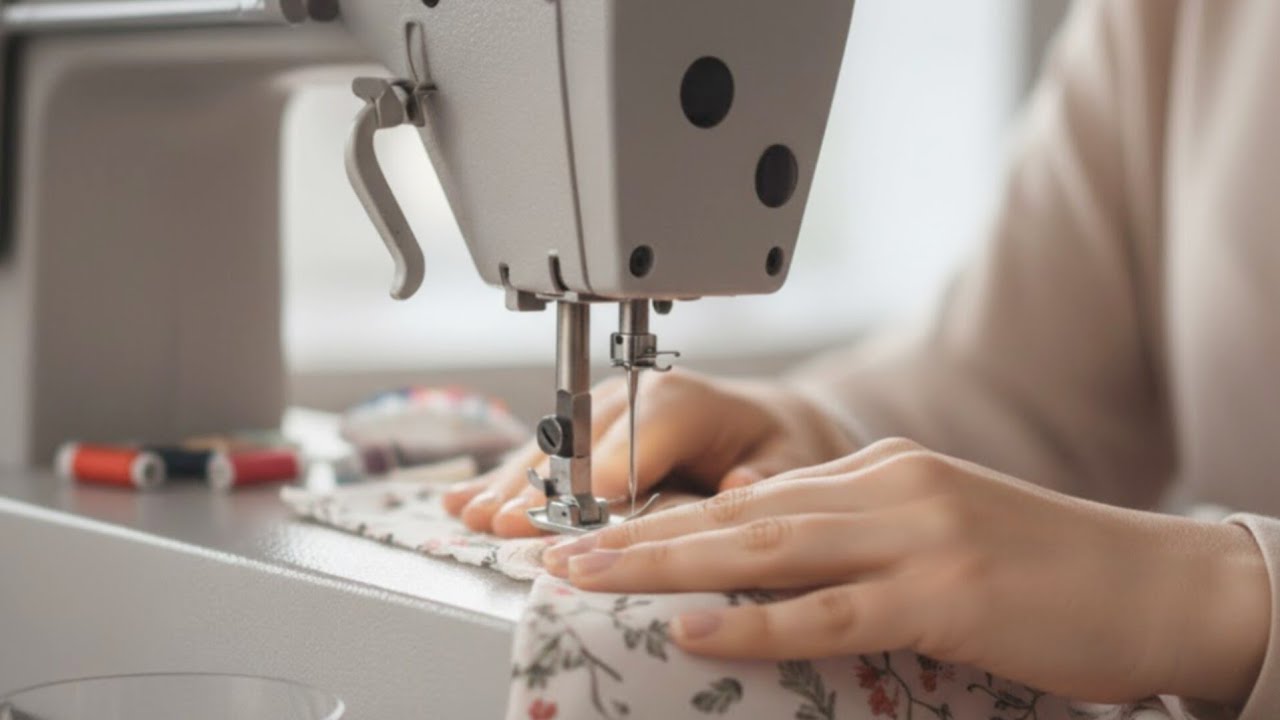
Every “why isn’t this working?” moment is a chance to learn what went wrong.
Once basic stitches feel familiar, you start combining those skills in a project, where small problems give you a reason to stop, think, and find a solution.
As you take on more demanding projects, extra steps, unfamiliar techniques, new materials, and construction challenges require greater precision and problem-solving. With each challenge, you start making decisions instead of simply following steps.
That shift is what moves your sewing skills forward. You begin to understand why a technique exists, how different components come together, and which choice works best for the garment. This progression also shapes the sewing classes at Stitched Together Studio
How Intermediate Projects Expand Sewing Knowledge
Intermediate projects broaden your knowledge because several techniques share one item, so each choice affects the next step. As those choices become more connected, 3 shifts start to appear:
- First, you move past basic seams into curves, corners, and darts.
- Then you start to see how facings, closures, and linings depend on each other.
- As a result, you plan each stage in your head before sewing.
Pattern Reading Becomes More Important
Pattern reading matters more now because intermediate patterns carry markings, notches, and instructions that decide how pieces line up. One missed notch leaves two panels out of line at the seam, and the mistake may not appear until assembly.
Detailed instructions create the same kind of problem when you change the sequence, because a facing goes in before a hem, and reversing that order forces you to undo the stitches. Once that sequence makes sense, you stop copying steps and start predicting them, making later patterns easier to read.
How Intermediate Projects Improve Fabric Knowledge
Fabric knowledge expands quickly at this stage because each material behaves differently under the needle. For example, cotton stays in place, knits stretch, and silky fabrics slide across the table, so the same technique can yield 3 different results.
Because fabrics behave so differently, weight and drape begin to shape your decisions before you cut anything. As you make those decisions, 3 habits develop as you work through different fabrics:
- You match interfacing and stitch length to the fabric in front of you.
- You test seams on scraps before working on the real piece.
- You choose finishes that suit the fabric’s weight rather than the pattern.
Developing Greater Sewing Machine Control
Machine control improves once you sew slower sections where accuracy matters most. Here are 3 areas that sharpen with practice:
- Your stitch length stays even across long, curved seams.
- You adjust tension, needle type, and foot for each fabric.
- You guide small pieces around curves without dragging fabric.
4 Advanced Sewing Techniques
Advanced sewing skills usually involve 4 techniques that help move your work from casual stitching toward more controlled construction. To build those skills, here are techniques worth learning next:
| Technique | What it teaches |
| Zippers and closures | Precise placement and even topstitching |
| Buttonholes | Accurate marking and machine setup |
| Linings and facings | How inner layers support the outer shell |
| Seams and finishes | Cleaner edges that resist fraying |
How Intermediate Projects Develop Problem-Solving Skills
Problem-solving skills develop as intermediate projects go wrong in ways you can trace, and you learn to find the cause yourself. As you work through those problems, 3 habits begin to form:
- You trace puckered seams back to tension, feed, or fabric.
- You catch the problem and fix it before continuing.
- You keep notes on mistakes so you repeat fewer of those mistakes.
5 Signs Your Sewing Projects Are Building Technical Knowledge
Most sewists notice progress through small changes in how they work rather than through the finished garment alone. Those small changes in how you work often become habits before they become visible in a finished garment (or in a photo). Here are five signs worth watching for:
- You understand why a technique exists, not only how it works.
- You know the next construction step before reading the instructions.
- You no longer repeat the same mistakes across projects.
- You identify and fix problems without asking for help.
- You try unfamiliar techniques without worrying as much about making mistakes.
Explore Advanced Sewing Classes by Stitched Together Studio!
Intermediate sewing takes patience, but every awkward seam you fix builds your skills. That patience is part of how Vicki teaches at Stitched Together Studio in Thorold. The machines are provided, too, so you can show up and get started.
If you have a project in mind, the project courses give you time to work through it with guidance along the way.
Book your next class and turn those questions into finished work.
Frequently Asked Questions (FAQs)
Q1. What are some intermediate sewing techniques?
Intermediate techniques include zippers, buttonholes, pleats, linings, facings, and seam finishes such as French seams or bias binding. Each one asks for accurate marking and steady machine control, so sewists learn them after basic seams feel comfortable.
Q2. What is the importance of having knowledge in sewing?
Sewing knowledge lets you fix problems instead of restarting a project. Advancing sewing skills also means you can adjust patterns, repair clothes, and pick materials that suit the design.
Q3. What are the essential sewing skills to learn?
The essentials cover threading a machine, sewing straight and curved seams, reading a pattern, measuring accurately, and finishing raw edges. You’ll use these skills in almost every project you make afterward.
Q4. Is sewing a difficult skill to learn?
Sewing is not difficult to start, though it does take practice to do well. With steady guidance, most beginners can finish a simple project within a few lessons.
