
Choose only challenges you have the potential to master that’s something you may have heard before. And truth be told, there’s nothing wrong with that. To enjoy an activity to the fullest, you need a little familiarity. And for sewing projects, the idea isn’t so different either.
Sewing experts always advise interested candidates to choose projects that match their skill level. But this doesn’t mean you should repetitively sew things you’ve already sewn before. In fact, finding the optimal balance between too easy and too difficult sets the ground for a productive learning experience.
With choices ranging from beginner to advanced levels, you can skip the frustration of perfection. Considering how ideal sewing projects are accompanied by manageable challenges, they offer a great source of accomplishment and motivation for learners seeking to grow.
Why Your Sewing Skill Level Matters When Choosing a Project
Learning can be a bit tricky. Whether it’s measuring a difficult fabric, rummaging through assorted threads, or identifying the right moment to close a stitch, upgrading your sewing skills can bring a mix of emotions. You’ll either get bored or have the urge to quit learning altogether.
But guess what? With a smarter approach, the journey becomes enjoyable.
Selecting sewing projects that match your skill level will never be wasted effort. The fine stitching of the finished piece (and the techniques you’ve learnt) alone reflect a sense of pride, already preparing you for the next fun step.
What started with a simple scrunchie could soon give you the confidence to sew something bigger, more complex, and practical- say, a jacket!
How to Identify Your Current Sewing Skill Level
Anyone can know the importance of matching existing skills with sewing projects. But only a few understand the right way to identify it. No need to worry because we’re here to help you out!
First things first, pay attention to what you can do. If knowing how a sewing machine works, threading the machine, and using it without facing any problems sound all too familiar to you, then you’re no beginner; you’re already skilled in the basics.
Making straight lines on scrap cloth and holding/guiding fabric through the sewing machine also count as sewing machine basics. For this reason, projects typically chosen by complete beginners include cloth napkins, small pillows, or simple tote bags.
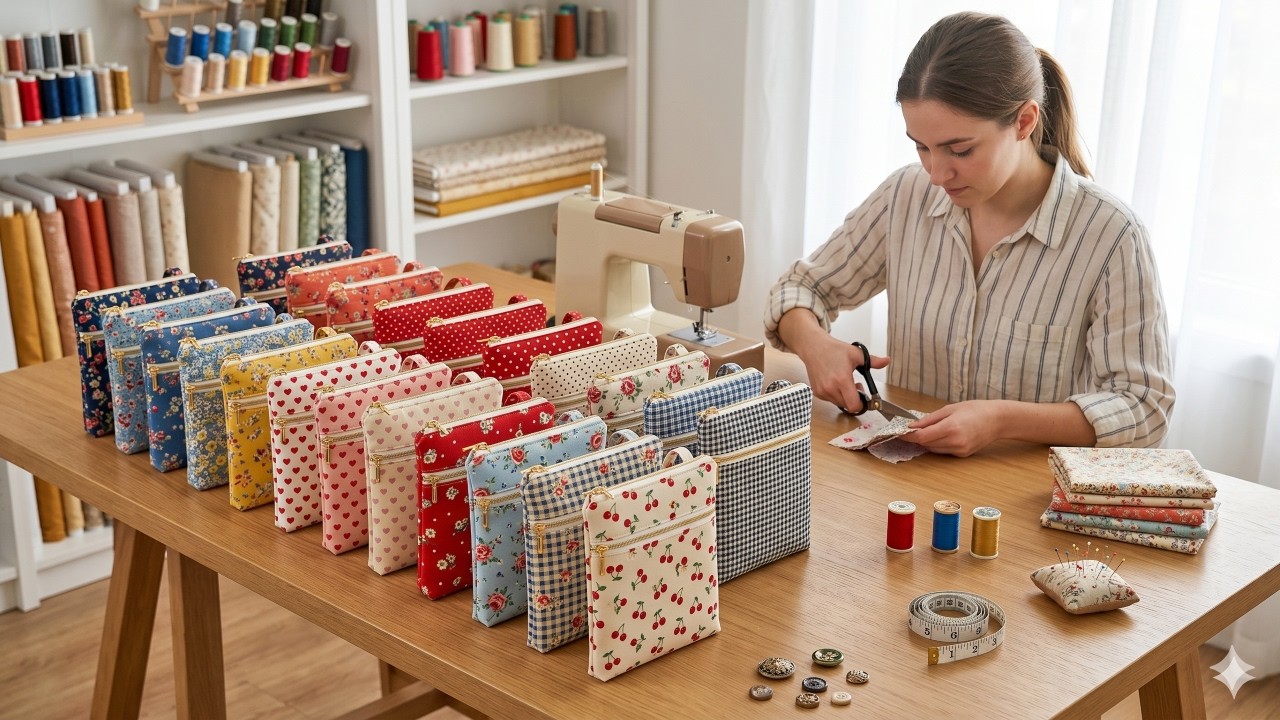
However, when it comes to developing beginner sewists, things work differently. It involves pressing seams with an iron, pinning pieces of cloth together, and trying projects with more shape. Learners who have a good grip on such sewing skills can make elastic skirts, basic zipper pouches, or unlined aprons.
Considering how practice makes perfect, intermediate sewists have a huge advantage in pursuing complex sewing methods. Be it sewing curves, adding collars, making buttonholes, or working with tricky fabrics, creating complex clothes and home items becomes a piece of cake with practice.
So what best describes you: A complete beginner, a developing beginner, or an intermediate sewist?
What Makes a Sewing Project Beginner-Friendly?
It doesn’t take much for a sewing project to be beginner-friendly. Simple construction, shorter project time, and patterns with the least complexity – that’s all it needs. Though it does require an expert’s guidance to help a beginner make the right choice.
- Simple Construction: Minimal cloth pieces fitting together spare the need to match hard curves or odd angles; basic machine stitching works with straight seams, basic folds, and simple edge finishes.
- Shorter Project Time: The project doesn’t take long to finish; making self-fulfilment achievable and frustration low.
- Limited Pattern Complexity: There are very few marks, notches, or tricky inner corners on the cloth (which would otherwise make the learning process difficult).
5 Signs You Are Ready for More Challenging Sewing Projects
Nothing in life is meant to stay still. It’s only fair that your current sewing skill level upgrades to something better. If you’re increasingly comfortable with the sewing you can do today, that’s a strong hint for you to pursue even more challenging sewing projects. Some other signs include:
- You Can Operate Your Sewing Machine Comfortably
- You Can Sew Consistent Seams
- You Understand Basic Sewing Terminology
- You Can Follow Simple Instructions Independently
- You Want to Learn New Techniques
What Makes a Sewing Project Intermediate?
Getting familiar with the basics is one thing; taking a bigger challenge is another. And that’s precisely what intermediate sewing skills are all about. The sewing projects considered ideal for helping learners develop intermediate sewing skills have a few features in common. These include:
- Multiple Construction Steps: More pattern pieces to organize and cut out (to make collars, pockets, and fold cuffs) in a specific, irreversible assembly order requiring extra time to plan each step.
- More Detailed Techniques: Hard parts to add (such as zippers and buttonholes), curved seams (like necklines and armholes), and inner linings for functionality and a clean, professional finish.
- Pattern Reading and Interpretation: Requires understanding garment structure from flat (2D) diagrams and visualizing it across a curved (3D) body, cutting fabric on the grain line, matching notches (to ensure seam alignment), and fitting adjustments for the body.
- Greater Precision: Entails lined-up notches, darts, and seam intersections (before stitching), basting to hold the tricky fabric parts tightly, sewing with exact seam widths, accurate cutting, and crisp pressing.
5 Ways to Evaluate a Sewing Project Before Starting
Options enable you to go for a difficulty level you’re comfortable with. Though sticking to one project can get tough when there’s a variety of sewing projects to choose from. Here are 05 ways to evaluate a sewing project before starting:
- Read the Full Project Instructions: Scan the guide thoroughly, look for tricky construction steps (such as hidden zippers, welt pockets, or tailored collars), and identify whether the project relies on tools you don’t have yet.
- Check the Required Techniques: Match the skill tags listed to your previously stitched projects, jot down specific techniques needed (like bias binding, easing curves, or French seams), and don’t hesitate to skip the project if it consists of two (or more) unfamiliar techniques.
- Consider the Number of Pattern Pieces: Count the total quantity of pattern pieces in the layout; avoid multi-piece lined garments (with facings and interfacings); and prefer projects with 10 (or fewer) pieces for quick, low-stress assembly.
- Review the Required Materials: Check fabric recommendations; avoid slippery materials (if you’re a beginner); and ensure you have the correct needle type and machine foot (as specified in the instruction manual).
- Estimate the Time and Patience Required: Break the workflow into different phases (printing, prep work, sewing, and finishing); calculate the estimated beginner time frame by 1.5 (if you sew slowly/unpick mistakes often); pick a quick-win weekend project (if your focus span or available free time is low).
How to Choose Projects That Help You Improve
Every aspiring sewist has one goal: to improve. Picking the right sewing project allows you to learn new things without causing fear of failure or additional frustration. A few tricks to choose wisely include:
- Introduce one or two new techniques at a time (such as zippers, pleats, or buttonholes) with each project.
- Revisit skills you already know (including stitching, seam finishing, or pattern reading) through different sewing projects.
- Increase complexity gradually (like stitching simple bags before fitted garments or multi-step projects) as your skills improve.
- Use projects to build toward a specific goal (garments, accessories, or custom designs) and polish relevant techniques.
Improve Your Sewing Skills with Stitched Together Studio’s Sewing Classes!
Becoming a good sewist isn’t a goal. It’s a journey that’s marked by milestones. From sewing scrunchies to creating jackets, matching your current skill level to sewing projects is the finest way to give your talents an upgrade.
Though when the learning process is guided by an expert, things get easier. At Stitched Together Studio, we believe learners from all age groups can improve their sewing skills!
So, are you ready to choose the right sewing project for yourself? If that’s a yes, reach out to our team today!
Frequently Asked Questions (FAQs)
Q1. What are the different levels of sewing skills?
Sewing skill levels typically range from complete beginner to advanced master. These are categorized by differing machine familiarity, project complexity, fabric types, and fitting expertise.
Q2. What is the best sewing project for a beginner?
A simple pillow cover or an envelope pillowcase are fairly easy to sew, which makes them a preferred choice for beginners.
Q3. What is the hardest fabric to sew?
There’s a variety of fabrics that are difficult to stitch, including silk chiffon and silk charmeuse.
Q4. How long does it usually take to learn to sew?
It only takes a few hours to learn the basics of sewing. However, achieving general proficiency requires a few months of consistent practice.
