
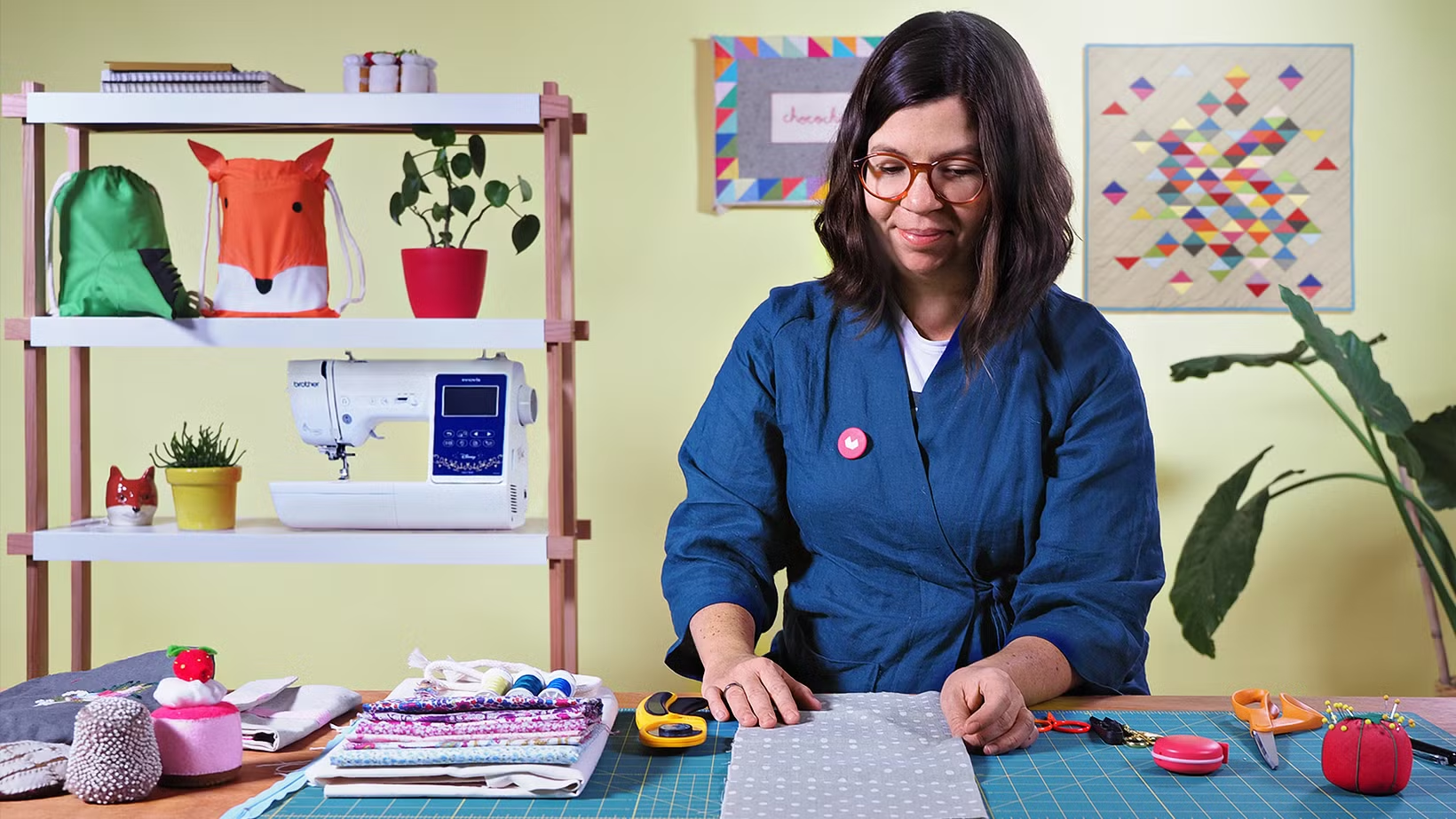
Still see sewing as just small fixes? Think bigger.
After all, one of the best parts of learning to sew is watching a handful of simple stitches turn into things you actually use. However, beginners often assume they need years behind a machine before making anything worthwhile. And that assumption stops them from starting.
In reality, once the fundamentals are learned, practical projects follow quickly while your confidence catches up with your technique. That’s why taking guided sewing classes is only the beginning.
Why Basic Sewing Skills Open the Door to Creativity
Basic sewing skills open up creativity because every technique you master gives you another way to shape fabric. Together, straight seams, neat hems, and a working buttonhole turn a short list of techniques into a long list of finished pieces. As those skills grow, every project you complete adds to your experience.
That means a wobbly first seam teaches you tension control while a crooked hem teaches you to measure before cutting. Over time, small builds lead straight into larger ones since sewing skills build on one another rather than reset. A drawstring bag prepares you for a lined tote and that tote prepares you for a zippered pouch.
Of course, learning to sew rewards far more than reading. In fact, reading a page about backstitching helps a little yet running one across real fabric shows you how thread and tension behave under your fingers. That’s why beginners who finish something every week move ahead of those who wait until they feel ready.
Everyday Items You Can Create With Basic Sewing Skills
Bags, cushions, pouches, and small kitchen pieces top the list as each relies on straight seams and simple hems rather than curves or fitting. None of them needs a complicated pattern. Here are 9 everyday items worth starting with:
- Tote bags: Two panels, two straps, and straight seams give you a daily carrier.
- Reusable shopping bags: Heavier fabric and a reinforced base hold groceries without tearing.
- Pillow covers: An envelope back has no zipper so they’re easy to remove for washing.
- Cushion cases: Square corners and a simple closure uplift a sofa’s appearance.
- Drawstring bags: A folded casing – and a cord can carry shoes, toys, or laundry.
- Storage pouches: Small rectangles keep cables, pens, and makeup in one place.
- Fabric bookmarks: Scraps and topstitching turn extra fabric into quick gifts.
- Coasters: Layered squares with batting help protect tables and sharpen your stitching.
- Kitchen accessories: Napkins, pot holders, and fabric jar openers sew up fast.
Simple Accessories for Everyday Use
5 simple gift bags rank among the easiest accessories to sew since they use very little fabric and only a few short seams. Even a crooked stitch is easy to fix as it only uses a small scrap of fabric. That’s why anyone learning to sew can finish the following 5 accessories in one sitting:
- Scrunchies: A fabric tube and a strip of elastic are created within fifteen minutes.
- Hair accessories: Headbands and bows let you handle gentle curves on a small scale.
- Reusable fabric gift bags: Hemmed rectangles with ribbon replace wrapping paper year-round.
- Basic aprons: Use ties and a patch pocket to create a practical first project.
- Protective covers: Sleeves for laptops, machines, or books keep dust off your things.
Home Décor Projects for Beginners
4 home decor items that suit beginners best because rectangles dominate the category – and it requires nothing other than straight stitching. Since the sewing is simple, the fabric you choose makes the biggest impact. These 4 projects include:
- Table runners and placemats: Hemmed edges and pressed corners dress a table without a single curved seam.
- Decorative fabric baskets: Stiff interfacing turns soft cotton into a container that holds its shape.
- Simple wall hangings: Quilted panels or applique shapes let you experiment with color and layout.
- Seasonal decorations: Bunting and table toppers reuse leftover fabric across every holiday.
Beginner-Friendly Clothing Projects
Pajama bottoms and simple tunics make the project easier for beginners since elastic replaces zippers (and buttons), removing a difficult step. That’s why learning to sew clothing becomes a matter of repeating seams you already know. Here are 3 garments beginners finish without trouble:
- Simple Skirts
- Elastic Waist Shorts or Pajama Bottoms
- Basic T-Shirts or Tunics (As Skills Progress)
Tips for Choosing Your First Sewing Projects
Pick a project that matches your current skills and ends with something you will actually use. The wrong first choice discourages people long before the fabric gets cut. Here are 4 guidelines worth following:
- Start with projects that match your skill level
- Focus on learning rather than perfection
- Practice one new technique at a time
- Finish what you start
Complete Basic Sewing Skills & Start Making New Things!
You can make all the above projects once you understand straight seams, hems and how to handle a steady machine. Those first stitches are just the beginning – each project builds the skills you need for the next.
That step-by-step approach is at the heart of Stitched Together Studio in Thorold. Its beginner courses teach these fundamentals to adults and children aged eight and older, with sewing machines and materials provided.
Four weeks from today, you could be carrying a tote you made yourself. Book your seat and start stitching!
Frequently Asked Questions (FAQs)
Q1. What kinds of things can I create after learning basic sewing skills?
Tote bags and pillow covers come first for most beginners. And once those feel familiar to create, scrunchies, aprons, and elastic-waist skirts follow easily. The skill behind them all is the simple straight seam.
Q2. Can I make useful items with only basic sewing skills?
With basic skills, you can create shopping bags, storage pouches, and cushion covers. Since you use them often, each project gives you practice that quickly pays off.
Q3. What should I sew first as a beginner?
Start with a drawstring bag. It only needs two side seams and a folded casing. A pillow cover is another easy option and both can be finished in one session.
Q4.What useful everyday items can I make with basic sewing skills?
Start with practical projects like reusable shopping bags and storage pouches – then turn leftover scraps into coasters and napkins. Since each needs little fabric, mistakes cost you almost nothing.
