
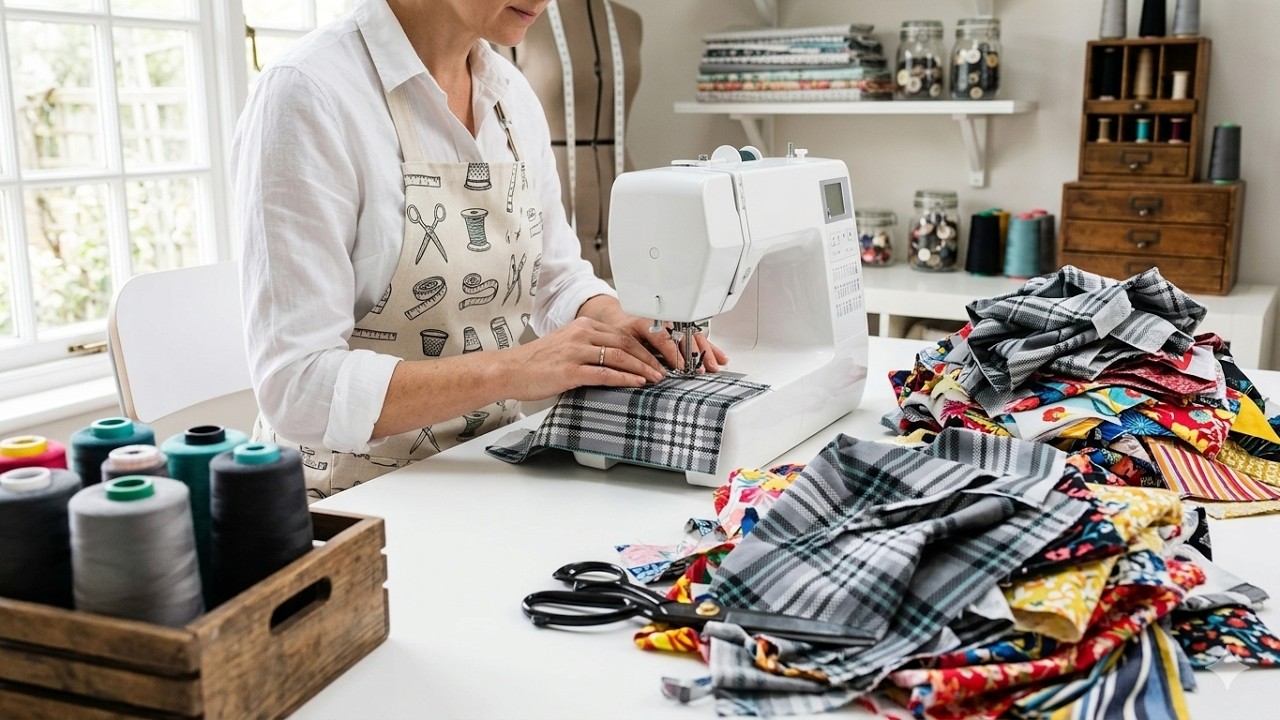
Every piece you make pushes you into something new. Whether you’ve stitched a simple pillow cover or attempted your first zippered pouch, every step adds a fresh layer of skill. Through this process, practical sewing teaches what tutorials cannot make hands-on work essential for real progress.
At Stitched Together Studio, sewers quickly discover that finishing real projects sharpens technique far faster than passive learning. Each project also replaces early uncertainty with growing confidence as every new piece brings a new challenge.
Why Hands-On Practice Is Essential for Learning to Sew
Hands-on practice matters because sewing requires muscle memory, accurate fabric handling and real machine control. Although watching videos teaches theory, only stitching fabric by hand trains your hands, eyes and feet to coordinate steadily over time. Therefore, skills improve through implementation, not through observing alone and that difference shows up quickly in finished work.
Beyond that, real projects create learning moments that lessons cannot match. For example, when seams shift or thread tension drifts mid-stitch, you work it out in the moment and remember the solution later. As a result, each completed piece builds confidence and that confidence helps you complete future complex tasks more easily.
3 New Skills Every Sewing Project Introduces
Sewing projects introduce three foundational skills at once: basic construction techniques, machine control and full project assembly. Each one develops naturally as you cut fabric, stitch seams, attach pieces and finish edges. That’s why the more projects you finish, the more these skills become familiar. Here are the three skills you’ll build through steady project work:
- Learning basic construction techniques
- Developing better sewing machine control
- Understanding project assembly
Together, these three abilities form the basis every sewist relies on, whether stitching a small tote bag or constructing a fitted garment.
Ways Beginner Projects Build a Strong Foundation
Beginner projects build a strong foundation by offering small, repeatable steps that strengthen technique gradually. For example, you start with manageable pieces, practice essential stitches – and learn to follow step-by-step instructions easily. The following 3 habits develop almost without effort along the way:
- Starting with simple sewing projects: Easy pieces like pillow covers, tote bags and scrunchies let you focus on accuracy rather than complexity.
- Practicing core sewing techniques: Repeating basics like straight stitches, hemming and seam finishing turns inaccurate movements into smooth ones.
- Learning to follow instructions: Working through written or precise steps trains you to interpret pattern language and complete projects on your own.
Together, these foundational habits set you up for cleaner stitches, better fabric control and the courage to attempt complex pieces. Once these basics feel natural, your overall progress speeds up noticeably.
How More Advanced Projects Introduce New Techniques
Advanced sewing projects introduce new techniques by demanding closer attention to detail, layered construction and unfamiliar hardware. Each leap in difficulty challenges your hands – and your mind at the same time. According to a 2023 peer-reviewed Heliyon study on sewing operation complexity, action complexity and cognitive complexity are significantly correlated with sewing defect rates and operation time fluctuations. That research aligns with what sewers feel during practice: harder pieces require sharper focus and slower, excessive work at every stage. The following 3 techniques typically show up once you move beyond beginner projects:
- Working with closures and fasteners: Sewing zippers, snaps – and buttons teaches precise placement and even spacing.
- Learning pattern reading skills: Interpreting symbols, notches and grainlines helps you cut and assemble pieces correctly.
- Understanding garment and accessory construction: Building dresses, bags or lined items pushes you to manage shape, fit and finishing in sequence.
Each new technique expands your range and the discomfort of unfamiliar steps soon turns into a routine skill you can rely on across projects.
4 Signs That Sewing Projects Are Helping You Progress
Four reliable signs show that your sewing projects are helping you grow: faster project completion, smoother machine handling, independent pattern reading, and readiness for harder techniques. In fact, skill growth often happens gradually so these markers help you confirm real progress. Watch for the following 4 changes as you continue stitching:
- You complete projects more efficiently
- You feel more comfortable using your sewing machine
- You can follow instructions more independently
- You’re ready to try more complex techniques
Faster finishes signal that difficult decision-making feels intuitive, while reduced machine confusion means your hands control the machine without guesswork. In fact, this pattern shows that the language of sewing instruction now feels familiar. Similarly, feeling ready for learning complex techniques, like curved seams, linings or zippered garments confirms that you’ve outgrown the beginner phase entirely. Therefore, trust these signals, since real progress often shows up before it is clearly visible in the finished piece. Each sign confirms that your hours at the machine are translating into real, lasting skill.
Explore Sewing Projects & How to Make the Most From It!
Sewing projects offer something tutorials cannot match: real-time feedback, real challenges and real growth. Each piece you finish trains your hands, sharpens your patience and prepares you for complex work ahead. Whether you’re stitching your first scrunchie or moving toward fitted garments, regular projects keep your progress steady and your confidence growing.
If you’re ready to turn occasional sewing curiosity into a real skill, Stitched Together Studio in Thorold offers hands-on classes for adults, teens and kids aged eight and up across the Niagara Region. Reserve your seat today and start mastering sewing techniques you’ll use for years to come.
Frequently Asked Questions (FAQs)
Q1. What are the techniques in sewing?
Sewing techniques include basic stitches, seam finishing, buttonhole sewing, zipper insertion, pleating, hemming and pattern cutting. In fact, beginners usually start with hand stitches and straight machine seams before moving toward closures – and shaped garment construction. Therefore, each technique builds on the previous one.
Q2. Is it better to learn to sew by hand or machine?
Most learners benefit from starting with hand sewing before moving to a machine. After all, hand stitches teach fabric control and basic stitch types – while a machine speeds up larger projects once you understand the fundamentals well. As a result, both methods complement each other.
Q3. What to practice when learning how to sew?
Focus on threading the machine, straight seams, accurate cutting and reading patterns. In fact, small sewing projects like pouches, pillow covers and scrunchies let you practice these skills repeatedly without pressure.
Q4. Is sewing a talent or a skill?
Sewing is a skill rather than a talent. Though some people learn it faster than others, consistent practice helps builds real skill for almost anyone willing to put in the time and effort.
