
I know why you have landed here! You must have gotten a sewing machine as a gift, or you simply bought it out of mere interest. You might be thinking of creating a beautiful dress for yourself that will make people go ‘aww’ around you.
If you’re ready to learn to sew in Niagara Falls, this guide covers everything — from choosing the right sewing machine to easy starter projects you can try.
Before you begin, there are a few essential sewing tools and gadgets you’ll want to know about. You must think sewing is just attaching clothes with a thread, simple, eh? The answer to that is NO! Sewing has many types and varieties – every fabric is sewn with precision with different kinds of stitches.
Let go of your worries and scroll down below to start creating your very first dress.
First Step: Learn to Operate a Sewing Machine
Every sewing machine comes with a user guide, you should read it because every machine is different. Moving on, your machine should be on a sturdy surface, as it vibrates once turned on. Next, you should pass the thread from the needle, which you will find below the machine’s arm.
After that, a thread will go into the bobbin right under the machine or on top of its foot. Now that both the needle and bobbin have threads, both threads need to be connected. Turn the machine’s wheel slowly – your needle will go down and back up again in full rotation, bringing up the bobbin thread with it. Pull it out, combine both the threads and you are ready to start sewing!
Second Step: Gather Your Essential Sewing Tools
Once your machine is ready to sew, you need to assemble your sewing tools in place to start learn to sew Niagara Falls. Here are some simple and budget-friendly tool kit essentials that you might want to have:
- Fabric Scissors
- Paper scissors
- Pins
- A seam ripper
- Measuring tape
- Fabric chalk
- An iron and an ironing board
- Machine needles
- Hand sewing needles
- A ruler
These 10 items should be available in your sewing kit. These tools are enough for you to get started.
Third Step: Choose Perfect Fabric and Thread
To choose the perfect fabric and thread, you first must ensure that their colors match perfectly. Use the same type of thread in your machine and bobbin to ensure that there is even tension in your stitch.
As a newbie, you should pick a material that is easy to manage, such as cotton or lawn. If you pick a fabric like silk, your stitches will not be as smooth because silk is slippery and hard to handle.
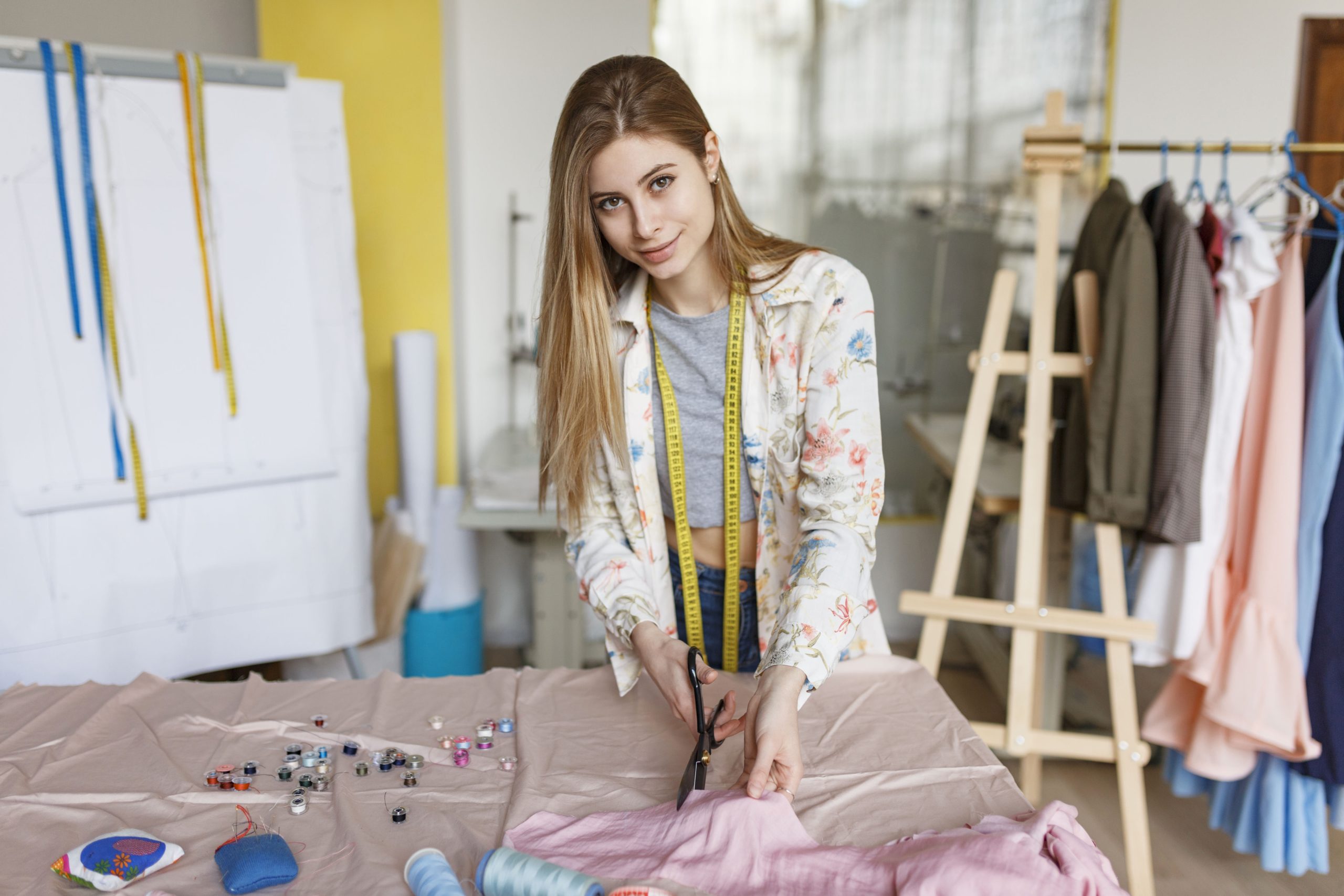
Fourth Step: Cut Your Fabric to Your Desired Pattern
Cutting into your fabric can be both exciting and thrilling. Take a deep breath because this is where it gets real.
Start by spreading the material on a flat, clean surface to press it. Before pressing it, you should first smooth out the wrinkles.
Before cutting:
- Double-check measurements.
- Confirm seam allowance markings.
- Ensure pattern pieces are placed correctly on the grain.
- Pay attention to directional prints.
Use sharp fabric scissors or a rotary cutter for clean edges. The process requires you to cut at a slow speed because it produces accurate results.
Remember: measure twice, cut once. Each deliberate cut you make increases your self-assurance.
Fifth Step: Use Simple Techniques to Stitch the Seams
The process of learn to sew Niagara Falls begins with establishing basic sewing techniques that use seam stitching to create a complete product from individual fabric components. The first seam technique requires you to set up your machine for straight stitching. Put the fabric below the foot presser and start at the beginning point to establish the backstitching process.
You must focus your vision on the seam guide rather than the needle to ensure straight lines. Press the seam with an iron to create an open seam or a folded seam to one side after completing the stitching process. Your sewing would achieve a professional look via the process of pressing, which requires you to avoid ironing back and forth.
Bonus: Swing Tips & Tricks for Beginners
Every sewist wishes they had known a few tricks earlier, so here are some beginner tips:
Test Before You Commit
Always sew a test stitch on scrap fabric to adjust tension and stitch length.
Change Needles Often
A dull needle can cause skipped stitches or fabric damage, so replace it every 6–8 projects.
Respect Seam Allowance
Most patterns use a ⅝-inch seam allowance, which needs to be verified before you learn to sew Niagara Falls.
Prewash Fabric
Fabric can shrink. Prewashing protects against unexpected sizing changes that might occur when you complete your project.
Go Slow Around Corners
Lift the presser foot (with needle down) to pivot cleanly.
People who want to learn sewing skills should establish this simple practice because it yields significant results. Success in sewing depends on both preparation and patience rather than achieving perfect results.
Find more tips and tricks at “12 Tips to Excel at Sewing Classes in Niagara Falls, Ontario”.
12 Tips to Excel at Sewing Classes in Niagara Falls, Ontario
Types of Hand Swing Stitches You Should Know
Hand stitches maintain their critical function during sewing machine operation because sewing technique enables sewers to achieve precise results that machines cannot produce.
Every beginner needs to learn these basic hand sewing stitches.
- Running Stitch – The simplest stitch, perfect for gathering fabric or temporary seams
- Backstitch – The running stitch provides weaker strength than this stitch, which creates durable bonds between seams.
- Slip Stitch (Ladder Stitch) – This technique creates hidden seams while it provides a neat way to close gaps.
- Whip Stitch – The technique serves two purposes because it connects two edges and completes unfinished seams.
- Blanket Stitch – The stitch provides both decorative and practical uses, which people commonly apply to felt and heavy fabrics.
Do It Yourself: Simple Sewing Project Ideas For Beginners
The Ideal Starter Projects consist of:
- Pillow covers
- Tote bags
- Simple elastic-waist skirts
- Aprons
- Zipper pouches
These projects of learn to sew Niagara Falls teach core skills:
- Straight stitching
- Seam finishing
- Basic hemming
- Simple closures
The moment learners experience pride in their achievement, their original goal transforms into greater aspirations, including making jackets and dresses and designing personalized home decor.
Read more about “What’s the First Thing a Beginner Should Sew?”
Ready To Learn How to Sew?
Sewing exists as a skill that all people can learn. The complete mastery of the art can be achieved through proper guidance that combines set learning paths with creative artistic support. Your journey is valid because you have the power to achieve anything from your current starting point, whether you are a complete beginner or someone who is returning after many years.
Stitched Together Studio’s “Learn to Sew” guide exists to remove intimidation and replace it with inspiration. The first time experts begin their sewing journey, they create their first imperfect seam. The difference between them and others is that they maintained their forward progress.
FAQs
What’s the hardest thing to sew?
The type of material matters a lot in sewing. For example, slippery fabrics like silk and chiffon or heavy fabrics like leather and denim are the hardest to sew.
Is sewing harder than crocheting?
Even though crochet needs fewer movements, it is harder than sewing. Both require practice, but crochet demands more concentration.
Can I learn to sew on my own?
Yes, absolutely! Sewing is a highly self-teachable skill. You can learn to sew on your own with our “Learn to Sew’ guide.
What are common sewing mistakes to avoid?
The most common mistakes any beginner can make are choosing the wrong thread or needle, improper pinning, inaccurate measurements and forgetting to press the seams.
What is the 3-3-3 rule for clothes?
The 3-3-3 rule is a fashion method that was popularized on TikTok, where you choose 3 tops, 3 bottoms and 3 pairs of shoes to create 27 different outfit inspo.
